
celebrity
Jean Christensen: The Woman Behind André the Giant’s Story

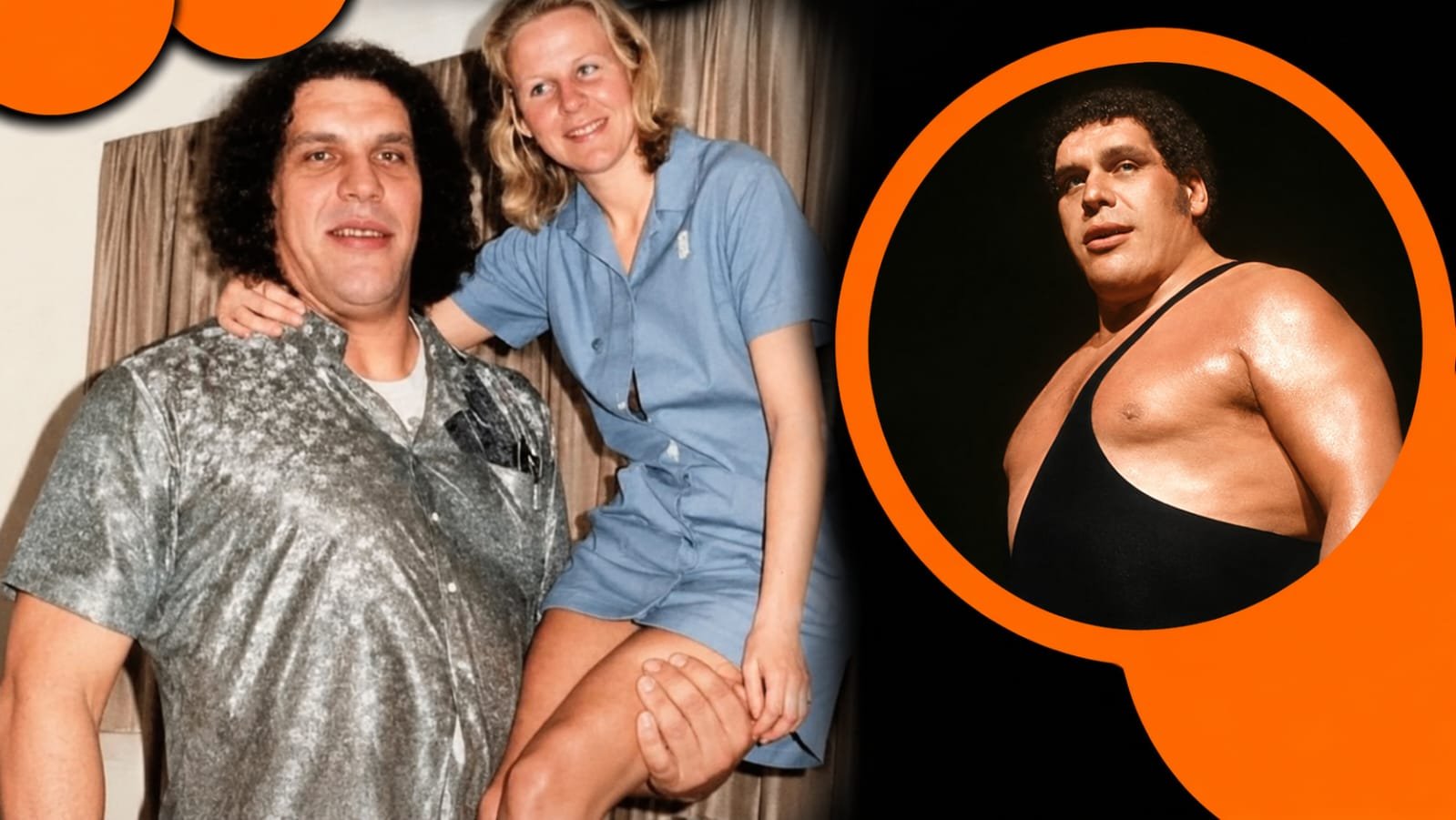
Jean Christensen is remembered because of her connection to one of professional wrestling’s most recognizable figures, André the Giant. But her story is not simply about being associated with a famous wrestler. She was part of the wrestling world during the early 1970s, became the mother of André’s only known child, and raised their daughter while maintaining a life largely away from public attention.
Unlike André, whose career was followed by millions of fans, Jean rarely appeared in the spotlight. Much of what is known about her comes from interviews with her daughter, Robin Christensen-Roussimoff, and accounts of André’s personal life. These details offer a glimpse into a woman whose place in wrestling history is important, even though her own story remains relatively private.
A Life That Remained Outside the Spotlight
There is limited reliable information about Jean Christensen’s childhood, birthplace, parents, and education. Unlike many people connected to famous entertainers, she did not build a public profile or regularly share details about her personal background.
Several online biographies describe her as an American woman who worked in the professional wrestling industry. However, detailed records of her early life and professional history are difficult to establish.
This lack of information is important when looking at her biography. Many websites publish specific birth dates, family backgrounds, and career details without providing dependable evidence. Rather than treating those claims as established facts, it is more accurate to focus on the events supported by interviews and credible reporting.
What is known is that Jean eventually became connected to professional wrestling, a business that would introduce her to a man whose enormous presence made him internationally famous.
How Jean Christensen Met André the Giant
André René Roussimoff, popularly known as André the Giant, became internationally famous through professional wrestling. His extraordinary size, strength, and memorable personality made him one of the most recognizable performers of his generation.
Jean met André through the wrestling business in the early 1970s. Accounts generally place their first acquaintance around 1972 or 1973, when André was expanding his career in North America.
According to published accounts, Jean was involved in public relations in the wrestling world. This professional connection brought her into the same environment as André, who was becoming a major attraction for wrestling promoters.
Their relationship developed beyond their professional connection. Although the exact details of how their romance began are not extensively documented, they eventually became parents.
André’s demanding career was an important part of their circumstances. He regularly travelled between cities and countries, appearing for different wrestling promotions. His schedule made maintaining an ordinary family life difficult.
For more latest stories and updates, visit Caleb James Goddard and Jack Nicholson: The Family Story Behind the Name
There are also conflicting accounts about whether Jean and André were legally married. Some publications describe Jean as his wife, while other accounts refer to her as his partner. Without sufficiently clear marriage documentation, describing her as his partner is the more careful choice.
Becoming the Mother of Robin Christensen-Roussimoff
One of the most important chapters in Jean’s life began with the birth of her daughter, Robin Christensen-Roussimoff, in 1979.
Robin was André’s only known child. Although she was born in France, she grew up primarily in the United States with her mother, in the Seattle area.
Becoming a parent brought Jean into a complicated situation. André was already an internationally recognized wrestling star, and his professional commitments kept him away from home for much of the year.
Their relationship also became strained, making arrangements for André to spend time with his daughter more difficult.
According to CBS Sports, Robin later recalled meeting her father in person only five times during her childhood. Two or three meetings happened at wrestling arenas, while others took place in connection with court proceedings.
These circumstances meant that Jean played the central role in Robin’s upbringing. Her daughter grew up knowing who her father was, but she did not experience the regular presence of a parent whose career involved constant travel.
Raising a Daughter Away From Wrestling Fame
One particularly interesting detail about Jean comes from Robin’s own explanation of her childhood.
Although her father was a major wrestling celebrity, André’s matches were not regularly shown in their home. Robin explained that her mother wanted her to develop her own understanding of André rather than forming an opinion based entirely on his public wrestling personality.
This decision gave Robin a different perspective on her father.
To wrestling audiences, André was the enormous performer known as the Eighth Wonder of the World. To Robin, he was simply her dad.
She later explained that she mainly saw him backstage and did not regularly watch his performances in the ring.
Jean also did not prevent Robin from having contact with her father. CBS Sports reported that Robin clarified an important misunderstanding about their family situation: her mother gave her the opportunity to visit André, but Robin was sometimes uncomfortable travelling across the country without Jean.
One proposed visit involved André’s ranch in North Carolina. His friend Jackie McAuley even travelled to Washington to help arrange the trip. However, the plan eventually fell through because Robin, who was still very young, did not feel comfortable making the journey without her mother.
This account provides useful context about Jean’s role. It shows that the distance between father and daughter was more complicated than a simple story of one parent preventing contact.
The Difficult Relationship Between Jean and André
Jean and André’s relationship was not always easy. Their personal differences affected how they arranged their daughter’s upbringing and how frequently André could see Robin.
CBS Sports described the relationship as strained and explained that it contributed to the limited time father and daughter spent together.
Despite these difficulties, André remained in contact with Robin. According to her account, he called regularly on important occasions, particularly holidays, and provided financial support through child support payments.
Their final telephone conversation took place on Christmas Day in 1992.
For Robin, the relationship was complicated. She understood that her father cared about her, but his demanding career and the difficulties between her parents meant they never developed the close relationship they might otherwise have shared.
The experiences of Jean and André therefore became an important part of Robin’s childhood, even though neither parent was a regular public commentator on their private relationship.
Life After André the Giant’s Death
André the Giant died on January 28, 1993, in Paris, France, at the age of 46. His death brought an end to an extraordinary wrestling and acting career.
Jean and Robin learned about his death through a message left by André’s lawyer. Robin later described how her mother came out of her bedroom crying to tell her that her father had passed away.
At that time, Robin was still a young teenager.
Following André’s death, Jean continued to remain largely outside public attention. She did not become a regular interview subject or seek recognition through her former partner’s fame.
Her daughter, however, gradually became more involved in understanding and preserving her father’s legacy. Robin later spoke with people who had known André professionally and shared memories of their relationship in interviews.
Jean died in 2008, according to CBS Sports. Detailed, independently verified information about her final years and the circumstances of her death remains limited.
Why Jean Christensen Is Still Remembered
Interest in Jean Christensen has continued because people want to understand the personal life of André the Giant beyond his wrestling achievements.
His appearances in the ring, his role as Fezzik in The Princess Bride, and his international popularity made him a cultural figure. Yet his family life was considerably more private.
Jean’s place in that story is closely connected to Robin. Through her daughter’s interviews, readers have learned more about André as a father and about the circumstances that shaped their relationship.
The 2018 HBO documentary André the Giant also brought renewed attention to this family history. Robin participated in the documentary and offered a personal perspective that audiences rarely heard during her father’s lifetime.
Jean’s biography remains incomplete because so little reliable information about her private life has been made public. Nevertheless, the available accounts establish her importance in André’s family history.
She was more than the former partner of a wrestling superstar. She was the mother who raised his only known child and the person who helped shape how that child understood her famous father.
For more latest stories and updates, visit VA Magazine.

Elon Musk did not found Tesla on his own, but he became the person most closely associated with its rise. When he invested in the young electric-car company in 2004, electric vehicles were still struggling to attract mainstream buyers. Many people saw them as slow, expensive, and less practical than petrol-powered cars.
Musk believed there was room for something different. He wanted electric cars that people would buy because they were attractive and powerful, not simply because they used less fuel. That idea became a major part of Tesla’s business strategy.
The road was far from easy. Tesla faced financial pressure, production problems, disagreements, and public criticism. Its first car was expensive, and turning a small startup into a major automobile manufacturer required years of work. Musk played a central role in that process, although the company’s success also depended on its founders, engineers, designers, and employees.
Today, the story of Elon Musk and Tesla is closely linked to the growth of electric vehicles. It is also a story of ambitious decisions, business risks, and the challenges of turning a bold idea into a global company.
Elon Musk’s Life Before Tesla
Elon Reeve Musk was born on June 28, 1971, in Pretoria, South Africa. He developed an interest in computers at a young age and taught himself programming. As a teenager, he created a video game called Blastar, which was published by a computer magazine.
Musk later moved to Canada and studied at Queen’s University. He transferred to the University of Pennsylvania, where he completed degrees in physics and economics.
His first major business venture was Zip2, a software company he started with his brother, Kimbal Musk. Compaq bought the company in 1999. Musk then helped establish X.com, an online financial services business that later became part of PayPal.
PayPal was acquired by eBay in 2002. The sale gave Musk the money to invest in larger projects. He went on to establish SpaceX and became involved in several technology businesses.
For more latest stories and updates, visit Molly Elizabeth Brolin and James Brolin: Their Family Story
By the time Tesla entered his life, Musk already had experience building companies. However, the automobile industry presented a different challenge. Developing a new vehicle required more than a good idea. It meant dealing with manufacturing, suppliers, safety standards, and the high cost of production.
How Elon Musk Joined Tesla
Tesla Motors was founded in 2003 by Martin Eberhard and Marc Tarpenning. Their aim was to prove that electric cars could be desirable and capable of competing with conventional vehicles.
Musk joined the company in 2004 as its leading investor in the Series A funding round. He became chairman of the board and helped guide the company’s early direction. Other important members of the early Tesla team included JB Straubel and Ian Wright.
Musk supported a strategy that involved starting with a premium sports car and gradually moving towards more affordable vehicles. The thinking was straightforward: a high-performance electric car could attract attention, demonstrate what battery technology could achieve, and help fund the development of future models.
This strategy became one of the defining ideas behind Tesla’s growth. Instead of trying to compete immediately with inexpensive family cars, the company first wanted to change people’s expectations of electric vehicles.
The Tesla Roadster Changed People’s Expectations

Tesla introduced the Roadster in 2008. It was a major step for a company that had not previously produced a car for customers.
The Roadster was different from many electric vehicles available at the time. It had the appearance and performance of a sports car while using an electric powertrain. Its battery system was based on lithium-ion cells, and its performance helped challenge the belief that electric cars had to be slow or uninteresting.
However, building the Roadster was not simple. Development costs increased, production faced delays, and the company needed more money to continue. Tesla was trying to enter an industry where established manufacturers already had decades of manufacturing experience.
That same year, Musk became Tesla’s CEO. His role changed from chairman and investor to the person responsible for leading the company through its financial and operational difficulties.
Model S Took Tesla Beyond Sports Cars

The Roadster helped Tesla attract attention, but it was not a vehicle designed for the wider car market. The company needed something more practical.
That opportunity came with the Model S, which entered production in 2012. It was a luxury electric sedan with space for everyday use, a long driving range for its time, and a large touchscreen-based interior.
The Model S helped Tesla reach customers who wanted an electric car without giving up the comfort and performance associated with premium vehicles.
Tesla continued developing its lineup with the Model X, an electric SUV introduced in 2015. Its distinctive falcon-wing rear doors made it stand out from other vehicles, although its design and production also brought engineering challenges.
The Model 3, introduced in 2017, represented an even bigger ambition. Tesla wanted to reach more buyers with a relatively affordable electric sedan. The Model Y followed in 2020, giving the company a vehicle in the increasingly popular crossover SUV market.
These cars helped move Tesla from a small electric-car startup towards a manufacturer with a wider international customer base.
Model 3 Production Nearly Became a Turning Point

The Model 3 was important to Tesla because the company wanted to move beyond wealthy buyers. But making a more affordable electric car in large numbers proved much harder than expected.
In 2017 and 2018, Tesla struggled to increase Model 3 production. The company faced manufacturing delays, pressure from investors, and questions about whether it could meet its targets.
Musk became deeply involved in solving these problems. He spent time at the factory and pushed the company to increase production. Tesla later improved its manufacturing process and gradually increased output.
This period became known as Tesla’s production challenge. It showed that developing a successful electric car was only one part of the job. The company also needed factories capable of building vehicles quickly, consistently, and at a cost that made business sense.
The experience changed Tesla’s position in the industry. It was no longer just a company with an interesting electric sports car. It was trying to become a large-scale car manufacturer.
The 2018 Controversy That Brought Legal Trouble
Musk’s leadership also attracted attention for reasons beyond Tesla’s products.
In August 2018, he posted on Twitter that he was considering taking Tesla private at $420 per share and that funding had been secured. The announcement caused a major reaction in the financial market.
The U.S. Securities and Exchange Commission investigated the statement and brought securities fraud charges. In September 2018, Musk and Tesla agreed to separate settlements with the regulator.
As part of the agreement, Musk stepped down as Tesla’s chairman but remained its CEO. Both he and Tesla agreed to pay $20 million in penalties. The company also agreed to strengthen its board oversight and controls over certain public communications.
The incident became an important moment in Tesla’s corporate history. It showed how Musk’s public comments could affect the company and its investors.
Why Tesla Expanded Into Batteries and Solar Energy

Electric cars are only one part of the wider energy business Musk wanted Tesla to build.
The company also developed products designed to store electricity. Its Powerwall battery is made for homes, while Megapack is designed for large energy projects and utility providers.
These products address a practical problem with renewable energy. Solar panels and wind farms do not always produce electricity when people need it. Battery storage allows some of that electricity to be saved and used later.
Tesla also expanded its solar business through its 2016 acquisition of SolarCity. The move connected solar energy products with its electric vehicles and battery systems.
This gave Tesla a broader business direction. It was no longer focused only on selling cars but also on products connected to electricity generation and storage.
The energy business remains an important part of Tesla’s long-term plans.
Elon Musk’s Position at Tesla Today
Elon Musk continues to serve as Tesla’s CEO. The company’s official leadership information identifies him as its chief executive, a position he has held since October 2008. His responsibilities include product design, engineering, and manufacturing. Tesla Investor Relations +1
However, Tesla is not his only business interest. He is also involved with SpaceX, Neuralink, and other companies. His work across different industries has made him one of the most recognizable business figures in the world.
His public image has also become a subject of debate. Some customers and investors admire his willingness to take risks and push new technology forward. Others have criticized his public statements, management decisions, and involvement in political issues.
These opinions have sometimes affected the way people view Tesla as a brand. Still, the company must compete through its products, prices, technology, manufacturing, and customer experience rather than relying only on its CEO’s reputation.
Tesla’s future will depend on how well it handles those challenges.
The most important part of Musk’s connection with Tesla is that he helped take an idea that seemed difficult to achieve and turn it into a serious business. He did not build the company alone, and its story includes the work of many people beyond its most famous executive. But his investment, leadership, and decisions played a major role in shaping its direction.
What began as an attempt to prove that electric cars could be exciting became a much larger effort to change the automotive and energy industries. That is the story behind Elon Musk and Tesla.
For more latest stories and updates, visit VA Magazine.

Molly Elizabeth Brolin has a connection to Hollywood that many people would recognise. Her father, James Brolin, has enjoyed a long career in film and television, while her half-brother, Josh Brolin, has become one of the industry’s most recognisable actors. Her stepmother is Barbra Streisand, one of the biggest names in music and entertainment.
Yet Molly has taken a different route. She has worked behind the scenes in film and television, explored independent theatre, and developed an interest in jewellery and handmade crafts. She has never made celebrity attention the centre of her career.
Although much of her life remains private, her professional credits and comments from her father provide a useful picture of her interests, family background, and work.
Molly Elizabeth Brolin’s Early Life and Family Background
Molly Elizabeth Brolin was born on November 28, 1987, in Los Angeles, California. She is the daughter of actor James Brolin and actress Jan Smithers.
Her parents were both connected to the entertainment industry. James had established himself through television and film roles, while Jan became familiar to television audiences for playing Bailey Quarters in the sitcom WKRP in Cincinnati.
James and Jan married in 1986 but later divorced in 1995. Molly was still young when their marriage ended, and her family circumstances changed as both parents continued with their separate lives.
Her father’s later marriage brought another famous name into the family. James married Barbra Streisand on July 1, 1998. Streisand became Molly’s stepmother, adding a celebrated singer, actress, and filmmaker to her extended family.
Molly also has two paternal half-brothers, Josh Brolin and Jess Brolin. Josh is known for his performances in No Country for Old Men, Sicario, and Avengers: Endgame. Jess has maintained a much more private life.
For more latest stories and updates, visit Danny Jones Penniman: Growing Up as Little Richard’s Son
Growing up in this family meant having close connections to several areas of entertainment. However, Molly eventually developed interests that took her away from acting and towards production and other creative work.
Why Molly Chose to Work Behind the Scenes
Molly did not follow the same professional path as her father or Josh. Instead of pursuing acting roles, she became involved in film and television production.
Her early screen credits include Royal Reunion (2011), John Mulaney: New in Town (2012), and Men in Black 3 (2012).
These projects gave her experience in different production environments. Her work on Men in Black 3 is particularly interesting because the film also featured her half-brother Josh Brolin, who played a younger version of Agent K.
The film starred Will Smith and Tommy Lee Jones and became another major entry in the popular science-fiction franchise.
Molly’s involvement was behind the camera rather than on screen. Production work requires people to manage practical tasks, support different departments, and help keep projects running smoothly.
Her credits show that she was gaining experience in the entertainment business without trying to become a public figure herself.
Smile Swamp Princess Showed Her Interest in Theatre
One of the more unusual projects in Molly’s career was Smile Swamp Princess, an independent rock opera presented at New York City’s Wild Project theatre in September 2013.
The production brought together music, visual art, and live theatre. Its story featured imaginative characters, including a Swamp Princess and a Space Cowboy.
Molly worked as a producer and art director on the project. Her responsibilities involved the production’s creative presentation rather than simply assisting with general film work.
The show was developed with music by Megan Lui and Justin Johnson. It also involved Molly’s niece, Eden Brolin, who was credited as its stage director.
The production ran on September 4 and 5, 2013. Both performances sold out, according to contemporary coverage by BroadwayWorld.
What made the project interesting was its approach to storytelling. Beneath the colourful characters and unusual setting, the rock opera explored the difficulties of growing up, relationships, and the move from adolescence into adulthood.
Molly’s involvement revealed an interest in independent artistic projects. It also showed that her creative work was not limited to traditional film and television production.
Working With James Brolin on Royal Hearts
Another important credit in Molly’s professional history is the 2018 television movie Royal Hearts.
The Hallmark production starred James Brolin, Cindy Busby, and Andrew Cooper. James also directed the film, playing Hank Pavlik, a Montana rancher who unexpectedly discovers that he has inherited a royal title and an estate.
Molly received an associate producer credit for the production.
Her involvement was later discussed by James during a February 2021 interview with Parade. He explained that Molly had worked as an associate producer on three of his films.
James said that these were smaller-budget productions, which gave him opportunities to hand over responsibilities and allow his daughter to contribute.
His comments are particularly useful because they provide a direct account of Molly’s professional involvement rather than relying on assumptions based on her family name.
They also show that her work with her father extended beyond simply visiting a film set. She had taken on production responsibilities as part of her own professional development.
Molly’s Interest in Jewellery and Creative Crafts
Film production is only one part of Molly’s creative background.
In the same Parade interview, James Brolin described his daughter as a jewellery designer and craftsperson. He spoke positively about her abilities and made it clear that he was proud of her creative skills.
Jewellery design requires a different set of skills from film production. It involves working with materials, developing designs, and paying attention to small details.
Although there is limited public information about Molly’s individual jewellery collections or commercial business, her father’s comments establish that this is a genuine part of her creative interests.
It also helps explain why describing her only as a film producer would leave out an important part of her professional identity.
Her Relationship With Barbra Streisand
Molly’s connection to Barbra Streisand is another reason her name attracts public interest.
Streisand married James Brolin in 1998 and became Molly’s stepmother. Despite Streisand’s international fame, Molly has generally kept her own life away from celebrity headlines.
There have been occasional public glimpses of their family relationship.
In November 2025, Streisand shared a Thanksgiving photograph on Instagram that included Molly. Her caption described a family gathering and mentioned children drawing pictures and making little necklaces.
Streisand also spoke about Molly’s son, Soli, in a June 2025 interview with People. The conversation offered a glimpse into her relationship with her grandchildren and the importance she places on family time.
These appearances show that Molly remains part of her father’s extended family, even though she rarely seeks public attention herself.
Does Molly Elizabeth Brolin Have Children?
Yes. Molly has a son named Soli. His name was mentioned by Barbra Streisand during her 2025 interview with People.
However, Molly has not made many details about her motherhood publicly available. Information about her son’s upbringing and her day-to-day family life remains private.
Similarly, there is not enough reliable public information to establish her current marital status or provide a detailed account of her romantic relationships.
She appears to prefer keeping those parts of her life separate from her family’s public profile.
A Career Built Around Her Own Interests
Molly Elizabeth Brolin’s professional story is different from what people might expect when they first learn about her family.
She has worked on film and television productions, contributed to an independent theatre project, and developed skills in jewellery design and crafts. Her work with her father also gave her opportunities to take on responsibilities as an associate producer.
There is no need to describe her as a Hollywood star to understand why her story is interesting. Her documented career shows someone who has explored several creative interests without following the familiar route of becoming an actor.
Although much about her personal life remains unknown, the available information gives readers a clearer picture of her professional background and family connections.
Molly has a famous surname, but her career has developed through work that largely happens away from the camera. That is what makes her story different from those of many other members of the Brolin family.
For more latest stories and updates, visit VA Magazine.

Danny Jones Penniman spent much of his life beside a man whose name became part of music history. His father, Little Richard, was known around the world for his powerful voice, energetic performances, and songs that helped shape rock and roll. Away from the stage, however, he had another side that few fans knew well.
For Danny, Little Richard was not just a famous singer. He was the man who welcomed him into his home, helped raise him, and became his father during his teenage years. Their relationship lasted for decades, taking them from Los Angeles to concert tours and eventually to Tennessee.
Danny rarely appeared in the spotlight himself. Most of what the public knows about him comes from his own memories of growing up with Little Richard. His story offers a closer look at the family life of a musician who spent much of his career entertaining millions.
Danny Jones Penniman’s Childhood in Los Angeles
Danny grew up in South Central Los Angeles with his mother, Creola Jones, and his siblings. His childhood was far removed from the glamorous world of music, even though one of the biggest names in rock and roll would eventually become part of his family.
Danny first met Little Richard when he was in elementary school. Richard had become friends with his mother through their connection to the Seventh-day Adventist Church.
At that stage of his life, Richard was taking religion seriously and had stepped away from his music career again. He was spending more time around the church and building friendships outside the entertainment industry.
He began visiting Creola’s home regularly. Danny remembered these visits as happy moments. Richard did not always arrive with the attitude people might expect from a major celebrity. Instead, he often brought bags of coins and threw them into the air for the neighborhood children to collect.
For more latest stories and updates, visit Gloria DeLouise: The Life of Burt Young’s Wife
The children were excited whenever his car arrived. Danny later recalled these memories in an interview with Rolling Stone in June 2020.
Those early visits helped build a connection between Richard and the Jones family. Over time, that friendship became something much more important in Danny’s life.
Why Little Richard Took Danny Jones Penniman Into His Home
A major change came in 1982, when Danny’s biological father died. His mother was worried about her teenage son’s future and wanted him to have someone who could guide him.
She approached Little Richard and asked whether he would take care of Danny. She believed Richard could offer him a better environment and help him make good decisions as he grew older.
Richard agreed to help.
Danny was 14 when he moved into Richard’s hotel suite at the Hyatt on Sunset Boulevard in Los Angeles in 1984. According to his account, the arrangement was made through a handshake. Richard became his father figure and took responsibility for raising him.
The change meant leaving his previous home and adjusting to a very different lifestyle. Instead of living with his mother and siblings, Danny was now spending most of his time with a famous musician.
Richard did not raise him by simply giving him money or expensive things. Danny explained that his father often offered advice without forcing him to follow every instruction immediately.
One lesson concerned money. Richard told him to control money rather than let money control him. Danny did not fully understand the message as a teenager, but he recognized its value as he became older.
That kind of advice showed the difference between the public image of Little Richard and the father Danny knew at home.
Growing Up Around Little Richard’s Music Career
Living with Little Richard also meant becoming familiar with the entertainment industry. Danny eventually joined his father on the road and experienced the demands of touring.
He saw the preparations behind concerts, met people from the music business, and watched how performers behaved away from their audiences.
Little Richard was famous for his energetic stage personality. His concerts were filled with excitement, but life behind the scenes could be less predictable. Danny witnessed disagreements, changes in plans, and the challenges of working with other established musicians.
One experience involved tours featuring Chuck Berry and Jerry Lee Lewis. The musicians had their own reputations and strong personalities, which sometimes made it difficult to agree on concert arrangements.
Danny remembered a disagreement during a series of performances in Brazil. Richard and Berry had agreed to alternate their positions on the bill. When Berry refused to open for Richard on the second night, he left. Richard responded by performing some of Berry’s songs along with his own music.
For Danny, these moments were part of growing up around professional musicians. He was able to see the business side of a career that most fans only experienced through records and live performances.
His father’s work also gave him a chance to hear stories about the early days of rock and roll directly from someone who had helped build the genre.
Life With His Father in Tennessee
In 2003, Little Richard moved to Tennessee to be closer to his sister. Danny went with him.
They initially lived in Lynchburg, but Richard later chose to spend much of his time at the Hilton hotel in downtown Nashville. He enjoyed the hotel environment and liked having people around him.
The arrangement suited his lifestyle. Even though he was performing less frequently, he still enjoyed meeting people and receiving visitors.
Danny became an important part of his father’s daily routine. They regularly travelled between Nashville and Lynchburg, where Richard also had a home.
Their journeys gave them time together away from other people. Richard often shared memories of his early career, including his experiences performing on the Chitlin’ Circuit and meeting other musicians.
These conversations gave Danny a personal connection to his father’s history. He heard stories about the music industry from someone who had experienced its early development firsthand.
By this point, their relationship had grown beyond the usual experience of a parent and child. Danny was also his father’s companion and helped manage everyday responsibilities.
Little Richard’s Health and His Final Years
Richard’s health became more difficult after hip surgery in 2009. He experienced ongoing pain and eventually needed a wheelchair.
His final concert took place on March 30, 2013, at the Orleans Hotel in Las Vegas. After that performance, he told Danny that he did not want to return to the stage.
Danny supported his decision. His father had spent decades performing, and his physical condition made touring increasingly difficult.
Richard also became more focused on religion and his private life. He turned down several opportunities involving interviews and entertainment projects because he felt he had already established his place in music history.
His appearance changed as well. The famous wigs, makeup, and colourful stage outfits gradually became less important to him. At times, he preferred wearing simple black clothes and showing his natural white hair.
Danny also remembered spending Friday evenings watching religious videos with his father. These quiet activities became part of their life together.
The contrast was striking. The man who had once performed in front of enormous audiences now spent much of his time at home or in his hotel room.
Danny remained close to him throughout this period, helping with his daily needs and staying by his side.
What Happened to Danny After Little Richard’s Death?
Little Richard died on May 9, 2020, at the age of 87. He passed away at his family home in Tullahoma, Tennessee, after battling bone cancer.
Danny confirmed the news of his father’s death. His passing was widely reported, and tributes came from musicians, entertainers, and fans who recognized his influence on modern music.
For Danny, the loss was different from what the public experienced. He had known Richard as a father for more than three decades. They had shared a home, travelled together, and spent many years building a close relationship.
Since his father’s death, Danny Jones Penniman has largely remained out of public view. There is limited reliable information about his current career, relationships, education, or personal circumstances.
He has not built a widely documented public career around his father’s fame, and claims about his personal wealth or professional achievements should not be treated as established facts without reliable evidence.
What is known is that Danny played an important part in Little Richard’s later life. His memories helped reveal the quieter side of a performer who was often larger than life in front of an audience.
His story is closely connected to one of music’s most influential figures, but it also stands on its own as a story of family, responsibility, and a relationship that continued long after the concert lights went out.
For more latest stories and updates, visit VA Magazine.
-

 Lifestyle4 days ago
Sosoactive: Understanding Active Digital Participation
-

 celebrity6 days ago
Kristi Branim Fox and Megan Fox: Two Sisters, Different Paths
-

 celebrity6 days ago
Toni D’Alto and Sylvester Stallone: The Untold Family Story
-

 celebrity6 days ago
Tommy Bynes: The Story Behind Amanda Bynes’ Older Brother
-

 celebrity6 days ago
Zulekha Haywood: Her Life Beyond Iman and Spencer Haywood
-

 celebrity6 days ago
Kai Musk: Inside the Private Life of Elon Musk’s Son
-

 celebrity2 days ago
Ajeita Deol: Inside the Private Life of Dharmendra’s Daughter
-

 celebrity2 days ago
Rachel Catudal: Her Life, Family and Marriage to Brandon Quinn